In 2026, supplemental oxygen technology has evolved beyond basic oxygen support. Today, choosing the right device is also a lifestyle decision—one shaped by mobility, comfort, and daily habits. From city outings to quiet moments at home, modern oxygen solutions are built to support life at every pace.
When searching for the perfect fit, you will likely encounter two primary categories: the portable oxygen concentrators and the best home oxygen concentrators 2026. Understanding how these devices integrate into your daily routine is the first step toward reclaiming your independence.
Understanding the Core Technologies
Before diving into specific models, it is essential to understand the two delivery methods that define modern devices.
-
Pulse Flow: This technology delivers oxygen only when you inhale. It is the hallmark of the modern portable oxygen concentrator, allowing for smaller batteries and lighter frames.
-
Continuous Flow: This provides a steady stream of oxygen regardless of your breathing pattern. This is the standard for a stationary oxygen concentrator, ensuring stability during sleep or high-demand clinical needs.
On the Move: The Portable Revolution
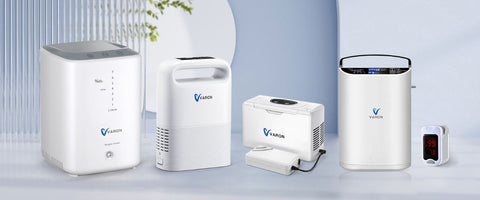
For those who refuse to let oxygen therapy slow them down, a high-quality portable best home oxygen concentrator 2026 is a game-changer. VARON’s 2026 lineup features several standout models designed for maximum mobility.
The VP-8G is the flagship of the portable fleet. Weighing just 4.37 lbs, it offers up to 8 pulse settings and clinical-grade purity. For users who prioritize duration over peak output, the VP-8 Lite serves as a reliable alternative, offering extended battery life for those long afternoons away from a power outlet.
If you require a steady stream even while mobile, the VP-6 bridges the gap. As a continuous flow portable oxygen concentrator, it is robust enough for all-day use while remaining transportable. Meanwhile, the VP-1 and VP-2 models offer dependable pulse delivery for standard daily tasks. The VP-2 stands out with its smart pulse technology and easy-to-swap batteries, while the VP-1 remains a popular, budget-friendly entry point for occasional use.
At-Home Stability: The Stationary Standard
When your primary need is reliability within the four walls of your house, a stationary oxygen concentrator is the preferred choice. These units are built for 24/7 operation and provide the high-capacity output required for intensive therapy.
The Serene 5 and Serene 3 represent the gold standard in this category. The Serene 5 is a heavy-duty stationary oxygen concentrator delivering up to 5 LPM of consistent oxygen, while the Serene 3 offers a more compact solution for those requiring 1–3 LPM. Both feature quiet operation and integrated humidification to prevent dryness during long-term use.
For users with more moderate needs, a home oxygen concentrator from the VH Series offers a blend of performance and convenience. The VH-1, VH-2, and VH-3 provide straightforward continuous flow. However, the latest VH-4 and the VH-2 Pro Wheel Edition have redefined the home oxygen concentrator category by adding wheel-assisted mobility, allowing you to move the device from the bedroom to the kitchen with zero lifting.
The Travel Specialist
Travelers have unique requirements that a standard best home oxygen concentrator 2026 might not meet. This is where a dedicated travel oxygen concentrator becomes indispensable.
The VT-1 is specifically engineered for life on the road. As a versatile travel oxygen concentrator, it features dual-mode operation (both continuous and pulse) and multiple power adapters for car use. If your trips are shorter, the VL-1 and VL-2 from the Light Series offer an ultra-lightweight travel oxygen concentrator experience, focusing on simplicity and ease of carry for quick errands or visits to friends.
Making Your Final Decision
To choose correctly, evaluate your daily "oxygen footprint." Ask yourself:
-
Do I spend more than 6 hours a day outside? (Prioritize a portable oxygen concentrator like the VP-8G).
-
Do I need high-flow oxygen while I sleep? (Invest in a stationary oxygen concentrator like the Serene 5).
-
Do I need a balance of both for a small apartment? (The VH-4 home oxygen concentrator is your best bet).
Learn More About Oxygen Concentrators
Download the VARON Product Guide and understand more about oxygen concentrator technology, features, and product options.
[Download Guide]
In 2026, VARON’s ecosystem ensures that you don't just receive oxygen—you receive a device that understands how you live. By matching your oxygen requirements with the right hardware, you can enjoy a seamless, supported, and active lifestyle.
FAQs
1. Can I use a portable oxygen concentrator for sleeping, or do I need a home unit?
It depends on your prescription. While a portable oxygen concentrator like the VP-6 offers continuous flow, many smaller pulse-dose units are only intended for daytime use because they rely on your inhalation to trigger the oxygen. For sleeping, most doctors recommend a stationary oxygen concentrator like the Serene 5, which provides a steady, guaranteed stream of oxygen all night and includes a humidifier to keep your nose from getting dry and irritated.
2. Which VARON model is the lightest for someone who walks a lot?
If you’re looking for the absolute easiest device to carry, the VP-8G is the top choice for 2026. It weighs only 4.37 lbs, making it a very popular portable oxygen concentrator for people who like to garden, shop, or go for walks. If your oxygen needs are very mild and you just need something for quick errands, the VL-1 and VL-2 "Light Series" are even more compact and travel-friendly.
3. Is a best home oxygen concentrator 2026 hard to move from room to room?
In the past, these machines were bulky and stayed in one corner, but 2026 models are much more mobile. If you want a home oxygen concentrator that won't break your back, look at the VH-4 or the VH-2 Pro Wheel Edition. These are designed with built-in wheels specifically so you can roll them from the bedroom to the living room effortlessly.
4. What happens if I’m on a road trip and my battery dies?
This is where a dedicated travel oxygen concentrator like the VT-1 comes in handy. It’s designed to run on your car’s power outlet (DC) while simultaneously charging the battery. This means you can keep your oxygen flowing during the drive without worrying about finding a wall plug. For extra safety on long trips, it’s always smart to carry a spare battery, like the ones used in the VP-2.
5. Why would I buy a stationary oxygen concentrator if the portable ones are so small?
While a portable oxygen concentrator is great for freedom, a stationary oxygen concentrator is a "workhorse." Units like the Serene 3 are built to run 24 hours a day, 7 days a week, for years. They are generally more powerful, quieter for watching TV or sleeping, and much more cost-effective for high-volume use at home compared to relying solely on portable batteries.





Leave a comment